Advice from opinion leaders in the F&B industry at the Korean-food globalization symposium 'Nanro Insight'.
Spain's three-Michelin-starred Disfrutar chef: "Cooking is a wonderful medium for a culture to spread across the world."
"In a recent interview, Min Hee-jin of Ador said NewJeans isn't trying to change K-pop — they just want to try something new and fun. That's exactly the attitude we need for the globalization of hansik. How can we redefine Korean food in ways that feel new and playful?"
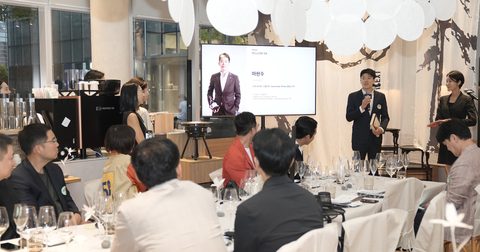
The K-pop group NewJeans made an unlikely appearance as a subject at a symposium on globalizing Korean food. The two-day event, 'Nanro Insight — The Future of Gastronomy: Talking Hansik,' was held on April 29 and 30 at the Leeum Museum of Art in Yongsan-gu, Seoul. The speaker was Cha Woo-jin, music critic and content-industry analyst who leads TMI.FM, and the talk was titled "Learning the hansik business from NewJeans."
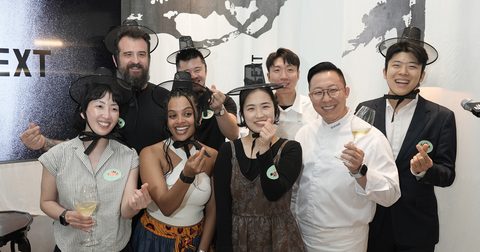
'Nanro Insight' was the first public event organized by the Nanro Foundation, chaired by JungYoon Choi (46), head chef at Sempio's Woorimat Research Center. Chef Choi took her cue from nanro-hoe, the meat-grilling gatherings that Joseon-era Silhak scholars are said to have enjoyed. She launched the eponymous global hansik branding circle in 2022, incorporated the group last year, and staged the symposium this year. The lineup was heavy on operators and branding minds. Attendees included the teams behind the two restaurants that ranked first and second at last year's authoritative World's 50 Best Restaurants — Central in Lima, Peru, and Disfrutar in Barcelona, Spain — alongside leaders from culture and IT. The Hankook Ilbo sat down with the key figures to ask what the keys to globalizing hansik really are.
① "Fine dining is a high-value-added tech industry"
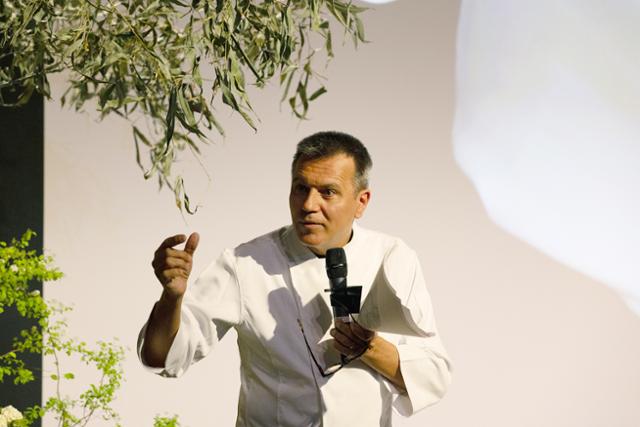
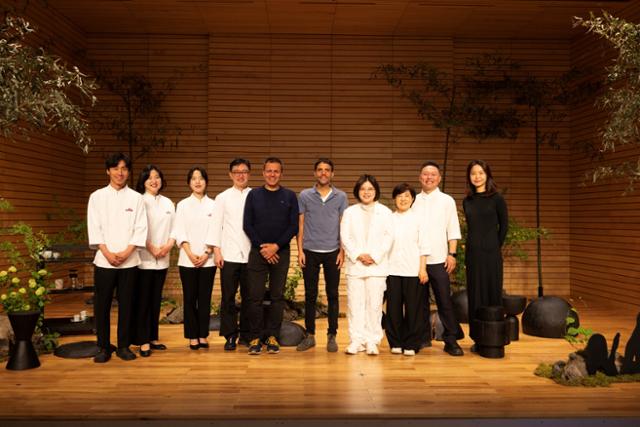
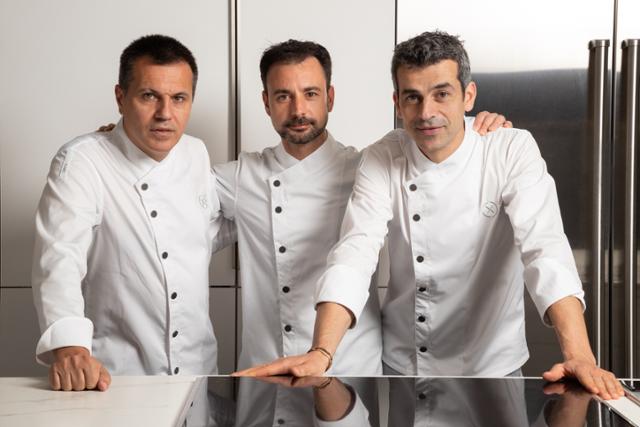
Global fine dining shifted from France to Spain in the 2000s. Leading that shift was elBulli, the Spanish restaurant that held three Michelin stars for 14 years while pioneering "molecular cooking" grounded in scientific principle. On the Nanro Insight stage on April 29 was Oriol Castro (50), a chef who carries elBulli's DNA. Together with two other sous chefs from elBulli, he opened Disfrutar in Barcelona in 2014. Last year the restaurant ranked No. 2 on the World's 50 Best Restaurants and holds three Michelin stars. Creativity is its concept, and it is booked out a year in advance.
"Creativity comes out of a long evolution," Castro said. "Korea, with its deep history and long culinary tradition, resembles Spain — the potential for its food culture to develop is enormous." Visiting Korea for the first time and tasting a wide range of dishes, he continued: "Korea has so many ingredients and techniques to share with the world — the fermentation know-how that Europe is beginning to admire, and the way vegetables are turned into namul side dishes. Above all, jang is a concept that has completely changed the way I see cooking."
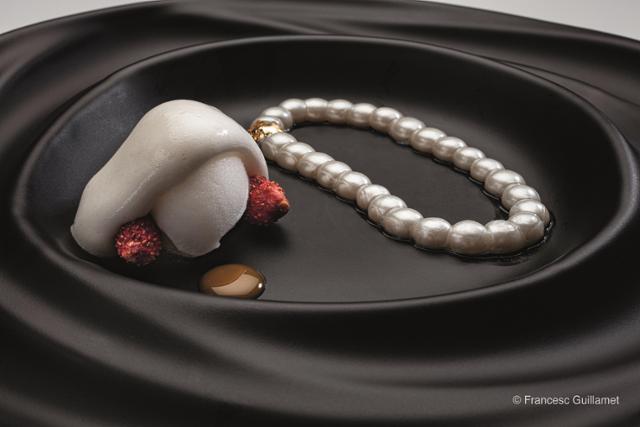
The foundation of Castro's creativity is investment in technique. He researches endlessly for new flavors and textures. In the past ten years alone, his team has created some 800 dishes. "Every dish carries the history and the emotion of the moment it was invented," he said. "A meal at Disfrutar is an experience that fills the soul." He added: "Fine dining, which employs so many people around the world, should become a high-value-added tech industry no less serious than IT." And he shares what he develops. Just as molecular cooking spread from Spain and drew the world's attention to Spanish gastronomy, he argues, sharing dishes and techniques becomes the medium through which a country's culture reaches the world.
Spain rose as a gastronomy powerhouse — and Disfrutar earned its reputation — precisely because they understood the coexistence of tradition and modernity. "Things that have existed for a long time can be rediscovered as ingredients, or eaten in newly invented ways. And today's innovations will be tradition a hundred years from now. I believe a chef must be creative enough to surprise themselves."
② "Don't look to others — build your own path"
"New York is crazy about Korean food right now. When my mother ran a Korean restaurant in 1998, we had to start by explaining what Korean food even was. Today when I tell someone I run a Korean restaurant, the response is 'I love Korean food.'"
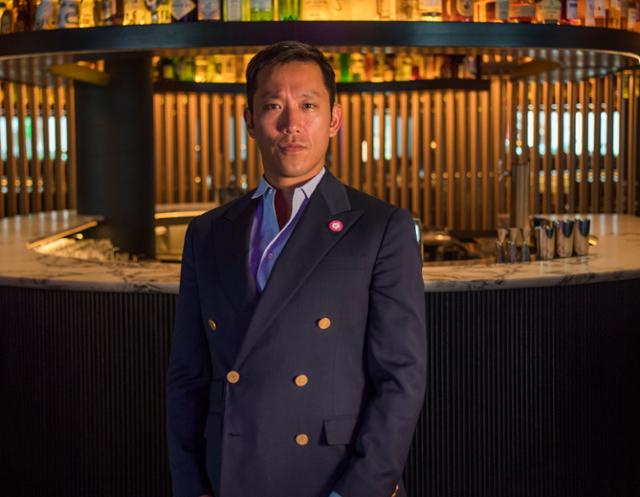
That is how Simon Kim (Korean name Kim Si-jun, 42), CEO of Gracias Hospitality Management, which runs the Korean steak house COTE in New York, described where the hansik wave stands today. He added a warning: "So far hansik has surged almost by accident, but without real content and direction, that goodwill will be hard to keep growing."
Kim immigrated to New York at 13, worked at renowned New York restaurants including those of Jean-Georges Vongerichten, and launched his hospitality business in 2013 with the Italian restaurant Piora. COTE earned one Michelin star just four months after opening in 2017. In 2021 he opened COTE Miami, which took a star in its first year, and in January this year he opened in Singapore. He has also added COQODAQ, a New York fried-chicken restaurant. He expects the four restaurants to bring in 100 billion won in revenue this year.
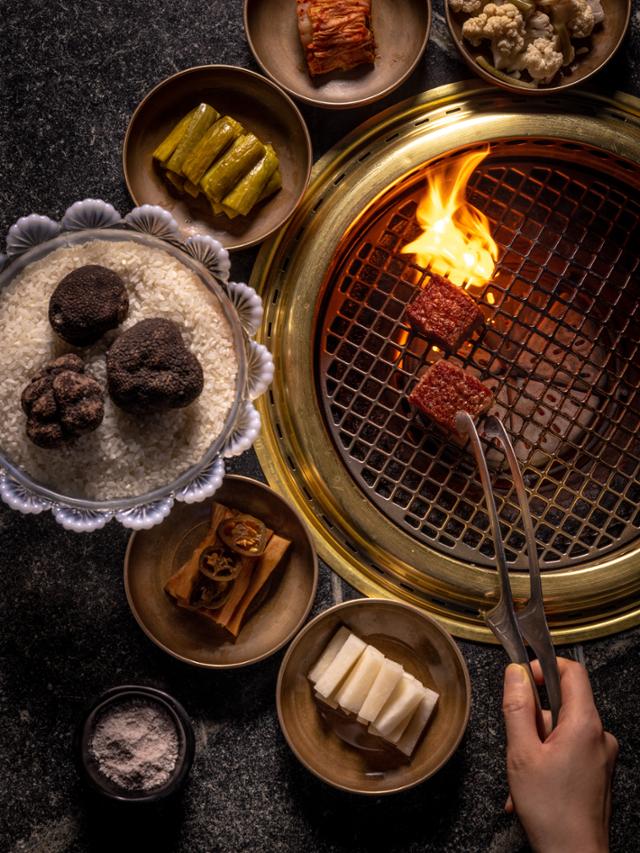
"The change in hansik's standing over the past ten years is greater than everything that came before it combined," Kim said. "Where New York's Korean restaurants used to be all barbecue, the scene has become genuinely diverse." He continued: "New York is a city that constantly hunts for something new. Nobody needs to walk the same single path — but whatever path you take, the important thing is that there is authenticity inside it."
"You have to build your own value," he said. "Koreans tend to seek approval from those around them. But if you don't find your vision inside yourself, it is hard to hold on to the direction you first set." As for COTE's success, he offered his own assessment: "What worked was that it wasn't a typical Korean barbecue joint. We kept the flavor of Korean barbecue but elevated the service — that identity as a 'Korean steak house' was what allowed us to reach the business-dining crowd."
③ The answer lies in connecting with other industries
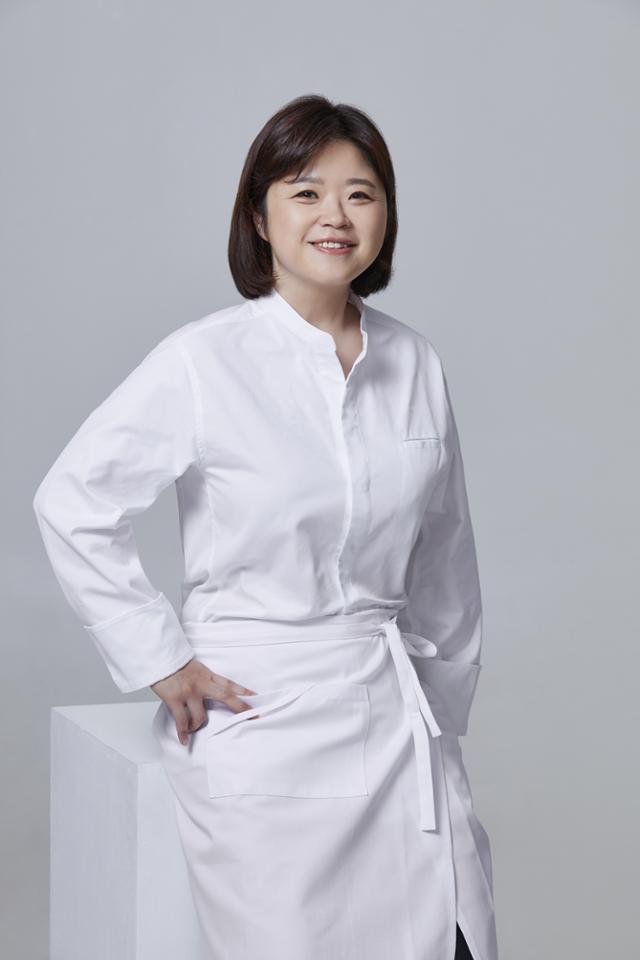
"Leadership in gastronomy moved from France to Spain, then through Northern Europe, then to Peru — and now it is heading to Korea. This is the golden time for the globalization of hansik."
That is how Chef JungYoon Choi, chair of the Nanro Foundation, explained why she launched the Nanro Insight symposium. Chef Choi built her career at Spain's Alicia culinary-science foundation and now serves as regional co-chair for Korea and China at the World's 50 Best Restaurants. "The last remaining button in Korea's soft-power outfit — K-pop, K-drama and the rest — is food," she said. "Even if we did nothing, K-food's momentum would carry us for another five years. But to turn this from a passing trend into a culture that lasts 50 or 100 years, this is a decisive moment."
Chef Choi compared the hansik surge to BTS, whose fandom formed abroad first, and observed that "Koreans themselves are often the ones who don't know the strengths and appeal of Korean food." She added: "At international gastronomy awards, celebrated chefs who didn't even know Korea existed keep coming up to tell me they want to visit. Of the 71 Michelin-starred restaurants in New York last year, 11 were Korean." In August last year, The New York Times ran a feature declaring that Korean cuisine had brought decades of French dominance to a close.
Chef Choi named "raising hansik's value and its scale" as the urgent task. The essential ingredient in doing so, she said, is connection. "The answer lies in connecting hansik with a wide range of industries." That is why, from the very first meeting of Nanro-hoe, she invited opinion leaders from across fields. Over two years, more than 300 experts from all kinds of industries have gathered inside Nanro-hoe to think about Korean food.
"My dream for hansik is big. Korean food is going to do incredibly well. Getting that message out there — that's where Nanro Insight begins."
· Original (Korean): hankookilbo.com