The Nanro Foundation's hansik symposium
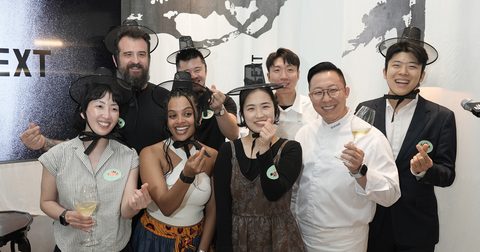
In April, The New York Times' list of the 100 best restaurants in New York for 2024 included seven Korean restaurants. The same month, the Asia's 50 Best Restaurants awards ceremony was held in Seoul. Last year, nine of the 72 restaurants that earned stars in the New York edition of the Michelin Guide were Korean. In front of Korean restaurants in London and Paris, foreign diners now form long lines. As hansik's standing keeps rising around the world, the Nanro Foundation staged a two-day event to think through "the future of hansik" together — the global hansik symposium NANRO INSIGHT, held April 29–30 at the Leeum Museum of Art in Hannam-dong, Seoul.
The Nanro Foundation is a non-profit set up to industrialize hansik, research it and train the next generation of talent. It grew from the community Nanro-hoe — around 300 experts spanning food, traditional liquor, finance, IT, branding and media, along with hansik chefs and celebrated restaurateurs — that formed in 2022 around Chef JungYoon Choi, head of Sempio's Woorimat Research Center and regional co-chair for Korea and China at the World's 50 Best Restaurants. The community was formally incorporated as a foundation in November last year. The name Nanro-hoe is borrowed from the 18th-century Joseon meat-grilling gatherings — a group would gather around a charcoal brazier to grill and eat together — favored by Silhak scholars such as Ji-won Park and Yak-yong Jeong.
A foundation born of a 300-person expert circle

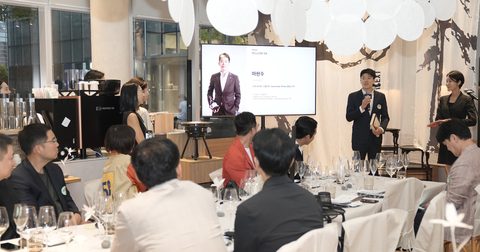
The theme of the foundation's first symposium was "The Future of Gastronomy: Talking HANSIK." It presented the discussions and research that Nanro-hoe has run over the past two years and hosted deep-dive presentations and panels on globalizing hansik with experts from Korea and abroad.
Opening the first day, Chef JungYoon Choi put the question this way: "To keep hansik popular 50 or 500 years from now, we asked ourselves how to prepare — and found two answers. First, we ourselves have to raise the value of hansik. Second, we have to grow its scale." And, she added, "what ultimately matters is boosting through connect — not only inside the hansik industry but with a wide range of other industries."
Following that opening, 31 speakers from a wide range of fields took the stage across the two days to share what they had been thinking about hansik's branding and its global growth. In the keynote — "Food: Why do we need a scientific approach?" — Prof. Jeong Jae-seung of KAIST's Department of Brain and Cognitive Sciences said: "Our brain changes even the attitude with which we treat other people depending on what we keep eating. I hope hansik will be researched and approached scientifically, so that it spreads across the world as a language equipped with philosophy and structure." He also stressed that "the great questions of our time — longevity, and reducing the carbon footprint — likewise call for a scientific approach to hansik."
The Identity session featured findings and updates from NANRO LAB, the foundation's research arm working on K-BBQ and training grill masters. On stage, Chef Bae Jae-hwan said: "The weakness of our meat-grilling culture is the absence of standards and criteria. We are redefining the English names of hanwoo cuts, studying the mechanics of grills and cuts, and researching table settings that pair meat with banchan — and connecting that know-how to training the next generation."
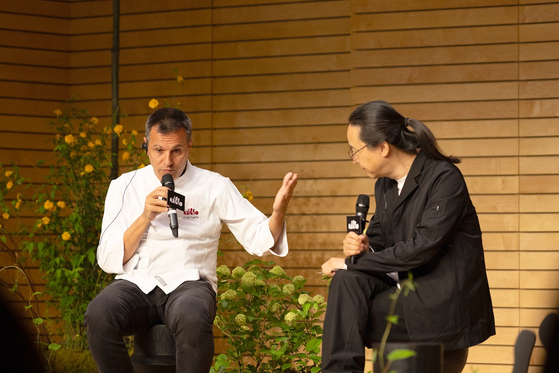
In the Special session, Chef Virgilio Martínez, founder and head chef of Peru's Central (2023 W50B No. 1), and Chef Oriol Castro of Spain's Disfrutar (No. 2) took the stage to trace how each of them arrived at their own distinctive values and philosophy, and to offer their views on hansik's appeal and its potential to develop.
Disfrutar is regarded today as one of the most creative restaurants in the world. "The motto of our work is creativity," Chef Castro said, adding that they "focus on investing in new techniques and finding new concepts." The current example: they are aging cauliflower in a Korean double-boiler that Chef Choi gifted him, tracking how flavor and color shift in search of the best result. "The most valuable thing in hansik right now is its fermented food," he said. "I wanted to come to Korea in person to understand and learn." He continued: "Jang, which carries Korea's culture and way of life inside it, has completely changed the way we see cooking. When we go back to Spain, my team and I will be talking a lot about the incredible power of fermented jang." He was speaking, he said, about the value of a food culture you cannot learn without traveling to Korea itself.
The Central team went home with 17 suitcases of ingredients
Central builds its tasting menus around the wide range of ingredients that grow in Peru's high-altitude regions, and is known as a place where diners can encounter ingredients they will find nowhere else. That is the result of years spent by Chef Virgilio Martínez and his sister, director Malena Martínez, traveling across Peru to research traditional ingredients and food culture and to weave them together with new approaches — a program of work that captures "a Peruvian identity." On stage the two joined author Cho Seung-yeon to look for the shared ground between Peru and Korea and to trade ideas on the growth of hansik. The Central team went back to Peru with 17 suitcases stuffed with machines and ingredients they had bought in Korea.
The Connect session in turn brought a series of presentations and discussions on raising hansik's industrial value: Park Young-hoon, founder of TheKit, on "Expanding global experience through the Korean Englishman YouTube channel"; Yong Tae-soon, CEO of WAD, on "Hansik and dining seen through CatchTable — present and future"; Choi Won-seok, CEO of Project Rent, on "Gastronomy and spatial-experience design"; and Cha Woo-jin, head of TMI, on "Learning the hansik business from NewJeans."
· Original (Korean): joongang.co.kr