‘Culture of Jang-making’ inscribed on UNESCO’s Representative List of the Intangible Cultural Heritage of Humanity
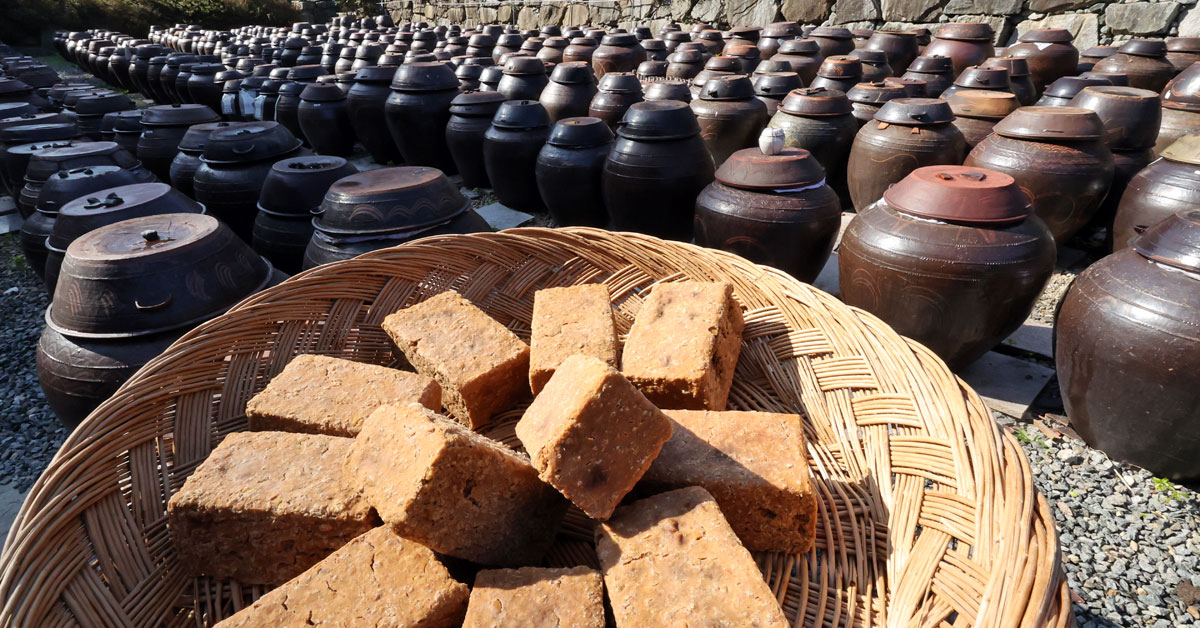
Making meju used to be a whole-village affair — boiled soybeans crushed in a mortar, the courtyard filled with neighbors, and, once the meju blocks were fermenting, the whole house filled with their pungent smell all winter long. Fermented meju mixed with salt and water becomes soy sauce (ganjang) and soybean paste (doenjang). Dried meju powder combined with red chili powder and glutinous rice becomes red chili paste (gochujang). Ganjang and doenjang exist in China and Japan too, but gochujang is uniquely Korean. Once made, these jang go with almost any ingredient and quietly fill Korean tables. Some households even carry a single flavor across centuries through gyeopjang — adding this year’s new ganjang to the ssi-ganjang, or “mother sauce,” left behind generations ago. Korean jang culture has continued this way for thousands of years, and will continue to.
On the afternoon of December 3 (local time), the Intergovernmental Committee for the Safeguarding of the Intangible Cultural Heritage of UNESCO — meeting in Asunción, Paraguay — inscribed Korea’s “Culture of Jang-making” on the Representative List of the Intangible Cultural Heritage of Humanity. Lee Kyu-min, president of the Korean Food Promotion Institute, who was in Paraguay for the decision, told JoongAng SUNDAY by phone: “Jang is the foundation of hansik. China and Japan have jang cultures too, but Korea is the first to have this inscribed. As K-food continues to spread, the attention of chefs and gourmets around the world will focus even more sharply on our jang culture.”
UNESCO inscribes it as a ‘culture,’ wary of over-commercialization
Ganjang, doenjang and gochujang — the so-called “jang trio” — are indispensable seasonings on the Korean table. Hansik is widely known abroad as a “healthy cuisine,” and at its core lie plant-based eating and fermented foods, with jang at the very center of that fermentation. Inscribing a food on UNESCO’s intangible heritage list is exceptionally cautious: “baguette culture,” not baguettes; “tea culture,” not tea; “kimjang culture,” not kimchi. Excessive commercialization and standardization of a specific food can damage the cultural diversity that UNESCO seeks to protect.
But it is precisely commercialization that makes global sharing possible. According to the Korea Customs Service, alongside K-food’s wider expansion, exports of traditional jang such as gochujang and doenjang, as well as sauces used to make buldak, tteokbokki, bulgogi and yangnyeom chicken, continue to grow at double-digit rates every year. Sempio, with 78 years of fermentation expertise, has seen its gochujang sales grow by an average of over 25 percent annually. “Since 2010 we have been researching Korean jang and fermented ingredients together with Spain’s Alicia Foundation, sharing our jang culture with chefs around the world,” said Sempio head chef JungYoon Choi of the company’s Woorimat Research Center. “Foreign chefs are the ones who are often surprised by how creatively our jang can be woven into their own cooking.”
“The more it mingles with the world’s cuisines, the greater the interest in hansik”
Interest in the Korean jang trio among foreign chefs has never been higher. Among the standout dishes on the hit Netflix show “Culinary Class Wars” was chef Edward Lee’s gochujang butter steak — and his inventive take on bibimbap. Global chefs drawn to hansik’s plant-forward, fermentation-rich tradition are now traveling to Korea to experience jang-making firsthand, then experimenting with their own sauces, creams, cheeses and butters to extend the flavor palette.
Chef Kwang Uh of Baroo, the modern Korean restaurant named Los Angeles Times’ “Restaurant of the Year” for 2024 — together with Nanro, the non-profit society dedicated to industrializing, researching, and developing next-generation talent for hansik — recently drew acclaim in the U.S. for dishes built around doenjang and gochujang powders and doenjang foams. Chef Mingoo Kang is exploring the extensibility of jang through his “Mingling Pot” project.
Some worry that letting our jang mingle with ingredients and sauces from other cuisines will erode the essence of hansik and of jang itself. Chef Mingoo Kang disagrees: “The way our jang meets and expands with ingredients from around the world is exactly what will grow the world’s interest in hansik and in jang.”
One urgent concern facing jang culture is capturing Korea’s younger generation. Urbanization and industrialization have all but ended the practice of making jang at home. More fundamentally, as the rice-and-side-dish center of Korean eating shifts toward Western meal patterns, the root of jang consumption itself is being shaken.
“Beyond globalizing hansik, it is just as important that Koreans themselves understand the value of what we eat,” Lee Kyu-min stressed. “We will expand the policy support needed to inherit, preserve and evolve our unique jang culture so we can pass it on to the next generation.”
The words of Lee Mal-soon — a researcher with the Korean Traditional Food Research Association and a disciple of Kang In-hee, the master of noble-family and traditional cuisine — carry particular weight here: “Seven or eight years ago I made jang together with children at three Seoul elementary schools. Later, without telling them, I mixed in supermarket ganjang and doenjang so they could taste them side by side. Every one of them said the traditional jang we had made was better. Taste is that honest; our DNA does not change. Everything requires a foundation. Few countries have four distinct seasons and the abundance of mountain and sea ingredients that Korea does. Growing children deserve the chance to eat food made from this variety, and from traditional jang. Yaksik dongwon — medicine and food share the same root. It is time we returned to basic education in our own food traditions.”
· Original (Korean): joongang.co.kr