Hosting a gastronomy award — and expanding its global network — as opportunity. The overarching goal: establishing a “Modern Busan Cuisine.” The ambition: branding the city as Asia’s maritime capital of gastronomy.
“Right now is the decisive moment for Busan to grow into a global food city.”
JungYoon Choi, chair of the World’s 50 Best Restaurants for the Korea-Taiwan region, spoke with conviction. The World’s 50 Best Restaurants (W50B) is a gastronomy guide produced by U.K. media company William Reed, regarded as an authority on par with the Michelin Guide. It is chosen by 1,080 experts across 27 regions worldwide — 40 per region — and Choi oversees the Korea and Taiwan panel. Recently appointed as a policy advisor to the City of Busan for gastronomy tourism, she spoke to us by phone.
“Over years of researching food culture around the world and thinking about the global competitiveness of hansik, I became convinced that Busan will play an important role in Korea’s gastronomy industry,” she said. “Busan brings together the sea and the mountains, so its ingredients are diverse; tradition and modernity coexist naturally in its food culture. That contrast is what I think makes Busan most compelling.”
She sees Busan as having strong potential to break through as a gastronomy destination — world-class seafood, distinctive local cuisine, and chefs with an international sensibility. On the other hand, its global visibility is still low, and it has few of the fine-dining restaurants that gastronomy guides tend to notice.
“We need to make world-class chefs, food experts and media pay attention to Busan as a new food-travel destination,” she said. She explained that hosting the Asia’s 50 Best Restaurants (A50B) awards — which the city is aiming for in 2028 — could position Busan as a new hub of Asian gastronomy and, over the long run, become the foundation for its restaurants to appear on the list itself.
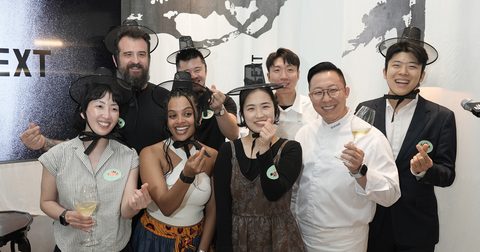
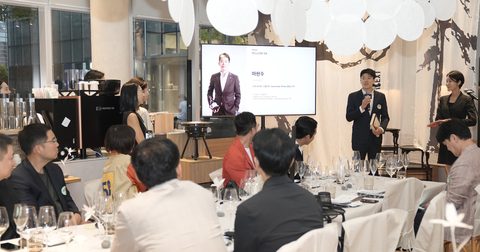
The first step has already begun. On the city’s gastronomy-tourism fam tour from March 26 to 28, Choi joined the W50B chairs for Japan and Hong Kong-Macau — in Seoul for the A50B awards — along with the chef of Hong Kong’s The Chairman, ranked No. 1 on A50B in 2021. They toured seafood at Jagalchi Market, dined at Michelin-listed restaurants and discussed how to work together on the gastronomy industry.
Over her two-year term, Choi plans to work with the city on food events tied to international occasions such as the Busan International Film Festival, along with collaborations with global chefs. She singles out the role of chefs. “There are chefs trying new things in Busan, and there are many from Busan working at world-class restaurants and bars overseas. If we can connect their international sensibility and creativity to Busan’s own assets, we can build a new gastronomy ecosystem.”
Her biggest goal as policy advisor is establishing “Modern Busan Cuisine.” “We have to define a ‘Modern Busan Cuisine’ that carries the city’s original culinary identity and produce landmark chefs and restaurants around it. From there we can brand Busan as a ‘maritime food city’ — and, further, as the ‘maritime food capital of Asia.’”
Chef Choi previously worked as a chef at Jungsik Seoul and as a researcher at Spain’s Alícia Foundation. She is currently research director at Sempio’s Woorimat Research Center and chair of Nanro Union Co., Ltd., a specialist body for hansik research and global hansik consulting.
· Original (Korean): busan.com