Is the global boom in Korean food (hansik) just national self-congratulation? In the days before objective indicators existed, Koreans admittedly leaned on their own “our-taste-for-our-land” logic. Not anymore. Google Trends shows that Korean food overtook Japanese food globally in 2021. In February this year, the global magazine Time Out reported that hansik had passed Italian cuisine — long considered the model of successful culinary globalization — to become the most-mentioned cuisine on social media. This year’s New York Michelin Guide awarded stars to 11 Korean restaurants, an all-time high. By any measure, Korean food’s globalization has kicked into high gear.

Against this backdrop, an English-language guide to Korean home cooking — Hansik: The Korean Cookbook — has hit No. 1 on Amazon’s cooking bestseller list, drawing fresh attention. The co-authors are chef Park Jung-hyun of Atomix — the Michelin-starred New York restaurant that has racked up stars for several years running — and chef JungYoon Choi, who moved through Chosun Hotel, Hyatt and Jungsik Seoul before joining Spain’s Alicia culinary science foundation, and has led Korean food research as head chef of Sempio Woorimat Research Center since 2010.
“Atomix landed at No. 2 on The New York Times’ Top 100 Restaurants list and No. 8 on the World’s 50 Best Restaurants 2023, which stunned the food and gastronomy industry at home and abroad,” Choi said. “The kind of overseas praise and enthusiasm Korean food is receiving would have been unthinkable a decade ago. It is astonishing and deeply moving.” The two authors said they see this as hansik’s “golden time” — the reason they wrote a book that lays out the standards and applications of Korean cooking for a general international audience. What follows is a Q&A.

Q. Congratulations on topping Amazon’s Korean food category. Where did you focus most on differentiating the book?
Both authors: Two questions kept us up. First, “Who will read this? What can this book — and Korean cooking — actually contribute to them?” So we planned it as a home cooking book — the food Koreans eat every day. We then wove in the history and hidden stories of hansik so it feels like listening to a Korean friend over a meal. Of the 350 recipes, 150 are vegan; strip out the fermented seafood in seasonings and the dried anchovies used for stock, and more than half of the book leans vegetarian. Our goal was to present hansik not as extreme vegetarianism or meat-heavy eating, but as a model for a balanced table — “a beautiful, balanced meal.”
Q. What was the second?
Park Jung-hyun: We didn’t want to show the past or the future of Korean food — we wanted to show it in the present tense. The passages we wrote alongside master artisans were meant to carry the story of Koreans who devoted their lives to their food culture, showing hansik’s depth and value. We hope this book becomes solid ground for the future of Korean cuisine.
Q. You held a launch event in the U.S. Any local reactions that stood out?
Park Jung-hyun: The American food magazine Bon Appétit wrote that the book is “a well-researched chronicle of how Korean home cooking has changed and grown — a book any curious gourmand or anthropologist would want on their shelf.” I love that framing. It captured how many readers connected with Korean food not as a set of recipes but as a whole country’s culture. It made me feel that interest in Korea and Koreans themselves — not just the food — would deepen because of this.
JungYoon Choi: What moved me most was that readers who bought the book actually cooked from it and posted photos to social media, tagging both of us. Hansik is unfamiliar territory, so we worked hard to keep the recipes as easy as possible to follow — it was wonderful to see how many people tried. Food is very much like language: you learn it by using it, again and again. Hansik must feel foreign and challenging to them, so seeing them attempt it moved me. Reactions like “I thought Korean food was all fried or spicy — I had no idea there were this many vegetable-based dishes” or “I was surprised by the range of ingredients” were fun to read. We tried to foreground hansik’s diversity, and I was happy to see readers pick up on exactly that.

Q. You are very active at home and abroad. How much has hansik’s standing risen?
Park Jung-hyun: I currently run four restaurants in New York. Compared with when I first arrived, understanding of and interest in Korean food has genuinely soared. The main customers of K-Town restaurants used to be Korean students, expat employees and tourists. Today it’s a wide range of locals. Korean restaurants are opening — and thriving — not only in K-Town but in Brooklyn, TriBeCa and other neighborhoods. As more Korean restaurants earn strong marks from The New York Times, the Michelin Guide and other outlets, hansik has become one of the hottest cuisines in New York over the last few years.
Q. Sushi is often cited as the early success case in food globalization. What still needs strengthening for hansik globalization?
JungYoon Choi: For hansik to become more than a passing hit and hold real staying power, we have to invest in people — in developing the next generation of talent. We need more capable people in the Korean-food industry, and stronger education for the future. Alongside that, we need research on hansik that lets us think deeply about its identity while pursuing genuine innovation. Research produces new hansik-experience products, and those keep the pipeline of good hansik products flowing. The way Korean confections like hangwa, yakgwa and tteok are being reappraised and industrialized right now is a good example. We also need to build global networks. Success in overseas markets ultimately runs on information and connections; the government should more actively help Korean chefs and F&B companies build those networks. And industrially, we need to build out the value chain. Korea’s own government popularized kimchi worldwide, yet the top kimchi exporter to the U.S. is China — Korea sits at ninth. This can’t be left to agriculture, gastronomy and restaurants alone; the whole industry has to work together to systematize hansik’s commercialization, export and distribution so the entire ecosystem benefits.

Q. What change do you hope this book will spark in the industry?
Both authors: This isn’t a book for restaurants or chefs — it’s a home cook’s book. We hope readers interested in Korean food feel its beauty through these pages, and become curious about Korea itself. Overseas, hansik is still special-occasion food. You need to check with your dining companions and get their buy-in just to go for Korean. We’d love this book to help hansik become a daily meal, alongside French, Italian and Japanese.
Q. What’s next?
Park Jung-hyun: No new book on the horizon. I want to keep running the restaurants and keep studying and communicating Korean food culture well.
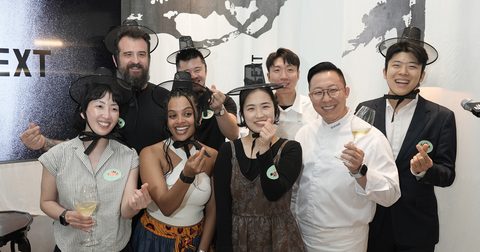
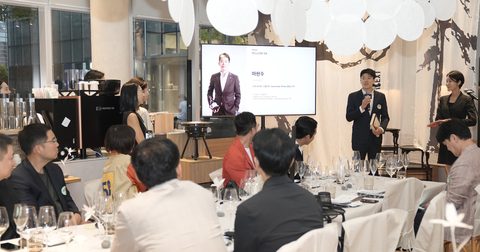
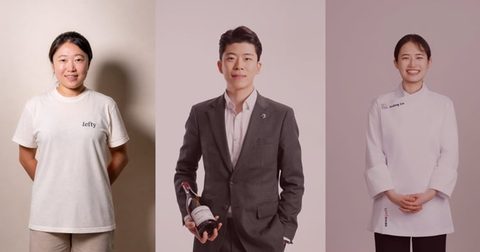
JungYoon Choi: In February last year we formed a small group called Nanrohoe around the theme of global branding for Korean cuisine, taking our name from the Nanrohoe gatherings of the great scholars and Silhak thinkers of 18th-century Joseon. Today the group includes the owners of always-lined-up restaurants such as Geumdwaeji Sikdang, Mongtan and Sanchung Sutbul Garden, along with food-company executives, media professionals and researchers who set trends. From May we expanded into hansik research and discussion, launching a research arm — NANRO LAB — whose first project is “The Science of Korean Meat Grilling.” We are also preparing to launch the nonprofit Nanro Foundation, dedicated to educating the next generation of hansik talent and to research. If the chance comes, our next book will build on NANRO LAB’s research and share hansik with even more people in global markets.

· Original (Korean): mk.co.kr